PRODUCTS & SOFTWARE

INDUSTRIES

SERVICES & SUPPORT

SALES & PARTNERS

PRODUCTS & SOFTWARE

Image

Improving fuel train flow, reliability, and safety for industrial burners

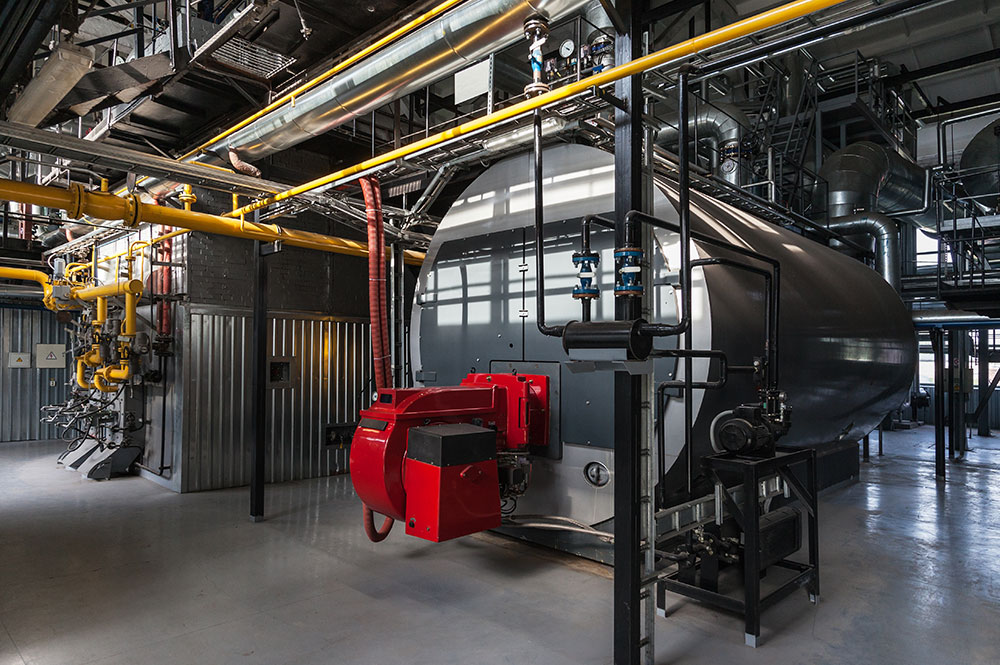
For over 90 years, Emerson has been at the forefront of combustion technologies in critical industries like commercial and industrial burners, boilers, furnaces, ovens, thermal oxidizers, incinerators and more. Our globally approved safety shutoff valves, solenoid valves, actuators and other components offer superior quality and flow performance, enabling you to meet the highest standards of safety and energy efficiency at a cost-effective price point.

Contact Sales

VIEW THE BROCHURE

Sample Image

CLICK HERE TO DOWNLOAD

Sample Image

Our Solutions for Industrial Burners


Pulse Firing

Pulse firing

Pulse firing increases productivity and reduces emissions in multi-burner gas-fired furnace systems. This technique, which involves “pulsing” the burners in ON/OFF or high-fire/low-fire cycles, offers greater temperature control and fuel efficiency. It also maximizes air circulation and homogenizes the heat within the furnace. To unlock the many benefits of pulse firing, burner systems require robust valves that can withstand frequent opening and closing to properly regulate heat.

Download Whitepaper

Related Products

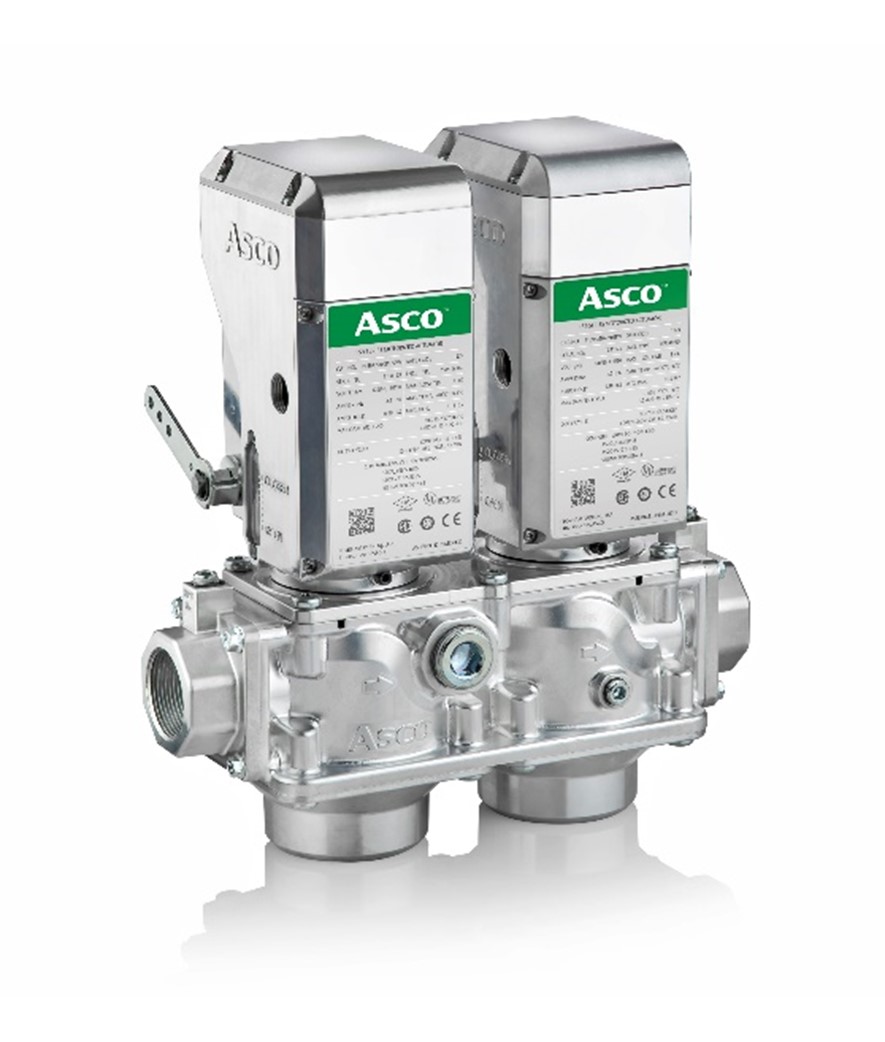
ASCO™ 214 High-Flow Gas Shut Off Solenoid Valves

The ASCO Series 214, also known as 8214, high-flow, low-pressure (5 psi) gas safety shutoff valves are specifically designed for on-off control of fuel gas in commercial and industrial gas burners. Their unique double-disc design with over travel provides redundant sealing for leak-tight shutoff on pilot or main gas lines. Optional flange allows for double-solenoid & solenoid-motorized valve construction to allow for modularity and ease of mounting. The valves are ideal for natural gas fired boilers, furnaces, grain dryers, kilns, gas generators and commercial kitchen/cooking equipment.

VIEW DETAILS
ASCO™ 215 High-Flow Gas Shut Off Solenoid Valves

The ASCO Series 215, is an aluminum body, lightweight gas safety shut off valve for high flow applications.  The pilot operated construction works from zero pressure differential with resilient soft seating for tight shut off. Optional flange allows for double-solenoid & solenoid-motorized valve construction to allow for modularity and ease of mounting. The 215 Series is ideal for vacuum service, oxygen service, heating equipment applications, and long-life applications.

VIEW DETAILS
ASCO™ Series 290D Pressure Operated Piston Valve

The ASCO Series 290 is a pressure-operated, direct acting angle-body piston valve built for demanding applications. Its straight-through body design is available in bronze or stainless steel. The valve is suitable for general service applications (air, inert gas, water, oil), plus steam, hot water, and auxiliary fluids. A large range of options, certifications and characteristics is available.

VIEW DETAILS

Frequently Asked Questions About Industrial Burners

The fuel safety shut off valves turns the burner ON and OFF and prevents the flow of fuel (gas or oil) into the combustion chamber should the furnace, oven, boiler, thermal oxidizer or other heating equipment shut down. Fuel safety shut off valves may be operated electrically (motorized or solenoid) or pneumatically and are required by national codes and standards.

Other valve characteristics:

•Normally closed.
•Subject to important lifetime tests.
•Must meet strict requirements for tightness and leakages.
•Designed to shut off in less than 1 second in the event of energy loss.
•Most of the time, two valves are required between the burner and fuel supply. 
ASCO 158/159 diagram
A shut off valve is a valve that can be closed to stop the flow of a media (“shutting” it off)  

•It can be manual or automatic, if the valve is automatic, then actuation can be electric, pneumatic (air pressure + electric), hydraulic (pressurized oil + electric).  
•An automatic shut off valve is a normally closed valve which means that the actuator is fail-safe in closed position (most of the time using a spring return), so the valve will shutoff automatically when de-energized.   

A critical safety component for combustion burners is the so-called “automatic safety shutoff valve”, which is a shutoff valves that gets de-energized when an unsafe condition is detected, ensuring that the flow of fuel to the burner is shut off and safe.  
•These valves are specifically designed for burner applications with very low leakages rate, high speed of closure, and good reliability.  
•A standard in the burner industry is to install two in-line - ensuring that if one is failing or leaking other will take charge of putting the burner in a shutoff position.

1. When energized, the motorized actuator’s stem pushes the valve’s stem down, opening the valve.
2.Upon loss of power, the actuator releases its strength, a spring in the actuator brings the actuator’s stem back and a spring in the valve brings the valve poppet up, shutting off the valve.
3.When energized, the coil attracts the plugnut which lifts the valve’s disc, opening the valve.
4.When de-energized coil does not pull the disc up anymore, and the spring can then push down the disc to shut-off the flow.
A fuel train is the set of fluid control components that lead from the fuel supply up to the burner. The goal of the system is to safely control the flow of fuel into the burner and to ensure a safe shut off when needed. Fuel train assemblies consist of many components that are governed by various standards. For example:

•NFPA 85: Boiler and Combustion Systems Hazards Code.
•NFPA 86: Standard for Ovens and Furnaces.
•NFPA 87: Standard for fluid heaters.
•EN 676: Forced Draught Burners for Gaseous Fuels.
•EN 746-2: Industrial Thermoprocessing Equipment.
Large burners are controlled using a combination of a Burner Management System (BMS) and Combustion Control System (CCS).
The BMS ensures the safe startup, operation, and shutdown of burners. 

•Sometimes referred to as Flame Safeguard Systems, the BMS starts the burner in the proper sequence by first eliminating gas from the combustion chamber, lighting the pilot (if there is a pilot flame) and then opening the main fuel line. 
•During operation, the BMS monitors the main burner flame and will cut power to the safety shutoff valves when the flame is not detected or if any unsafe condition is detected. In addition, the BMS checks for safe operating conditions upon startup; if conditions aren’t met, the BMS will stop the startup sequence and alert the operator.

The CCS consists of equipment to control the fuel-to-air ratio and firing rate. These mechanical and electronic components can include actuators, flow control valves, programmable logic controllers (PLC), variable frequency drives (VFD) and flow sensors. Under some conditions, the BMS and CCS can be integrated into the same control equipment.

A heating equipment turndown ratio is the ratio between the equipment’s maximum and minimum heat output. It varies with burner’s technology used. A burner that has a turndown ratio of 10:1 signifies that it can operate with a heat output of 10% of its maximum. The turndown ratio matters for the heating equipment market, indeed, having a high turndown ratio means that there is a bigger window for modulation. Indeed a 10:1 ratio will mean that the burner can work between 10% and 100% of its capacity opening possibilities to run it at 20%, 30%, 40%, etc. when the need for heat varies. This drives significant gains in fuel consumption and emissions as it increases possibilities to use only what is needed.

Fuel types for burners and boilers include:

•natural gas
•fuel oil (diesel)
•biodiesel
•coke oven gas
•biogas
•hydrogen
•LPG (mainly butane and propane)

Some combustion systems use solid fuels (such as solid biomass or coals), those systems are designed differently and have different rules and challenges that Emerson can also help solve.

NFPA stipulates proved-closed requirements for fuel safety shut off valves that can be met one of two ways.
The first is by implementing a proof-of-closure switch.

  • Installed in the valve by the manufacturer, this interlock verifies that the fuel safety shut off valve is fully closed before the system’s purge and ignition cycles can begin.  
  • A proof-of-closure switch needs to be factory set and non-adjustable, and it must be activated only after the valve has reached the closed position. This means that a special arrangement for overtravel must be put in place. 

The second way to meet proved-closed requirements is by deploying a valve proving system.  

  • This system can be active or passive. When active it uses a pump to pressurize the piping between two fuel safety shut off valves, monitors the pressurized gas for leakage prior to system startup. When passive, this system proves each valve separately with a specific sequencing of opening and closing the valve individually checking for leakages with pressure switches.  
  • A valve proving system can be mandated in Europe on burners’ fuel trains depending on their heat output. In NFPA, the valve proving system can replace the need of proof of closure switches in certain cases.
Required by many standards including FM, NFPA and UL, visual indicators show whether a fuel safety shutoff valve is open or closed. This enables operators to act with full confidence in situations where the valve must be closed for safety reasons.

Indicators are typically mechanical in nature. Some standards dictate that if a light or LED is used instead, then the absence of light cannot show a position. This requirement makes having a closed-position light indication more complicated, as power to the valve stops when the component is closed.
One way to ensure fuel safety shutoff valves are well-maintained and will operate reliably in the event of a shutdown is by conducting annual or more frequent leakage tests. Because valve seats wear over time, these tests ensure gas is not leaking through the valve.

Emerson valves for industrial burners feature a specific pressure tap to facilitate this testing procedure, allowing the valve to remain installed on the pipe during testing. These pressure taps also facilitate the installation of pressure switches for pressure limit monitoring or automatic leakage detection when used with a valve proving system.

Media & Case Studies

Automotive Image
Improving supply lines in a major oil refinery
Read More
Automotive Image
The latest in shut-off valve technology
View Article
Automotive Image
Improving Industrial Sustainability
View Article
Automotive Image
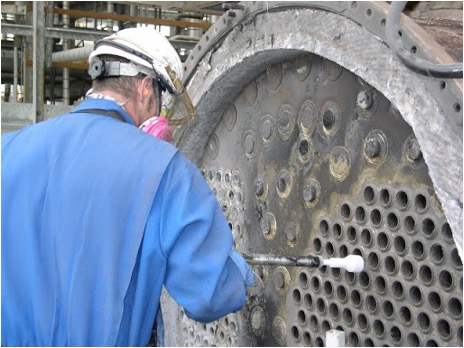
Efficient Cleaning of Sustainable Biomass Boilers
View Article
Automotive Image
Improving Industrial Sustainability
Read More
Automotive Image
Gas shut-off valve improved furnace efficiency
Read More